Culture observations

A Night at the Museum with Ai Weiwei at Palazzo Strozzi in Florence

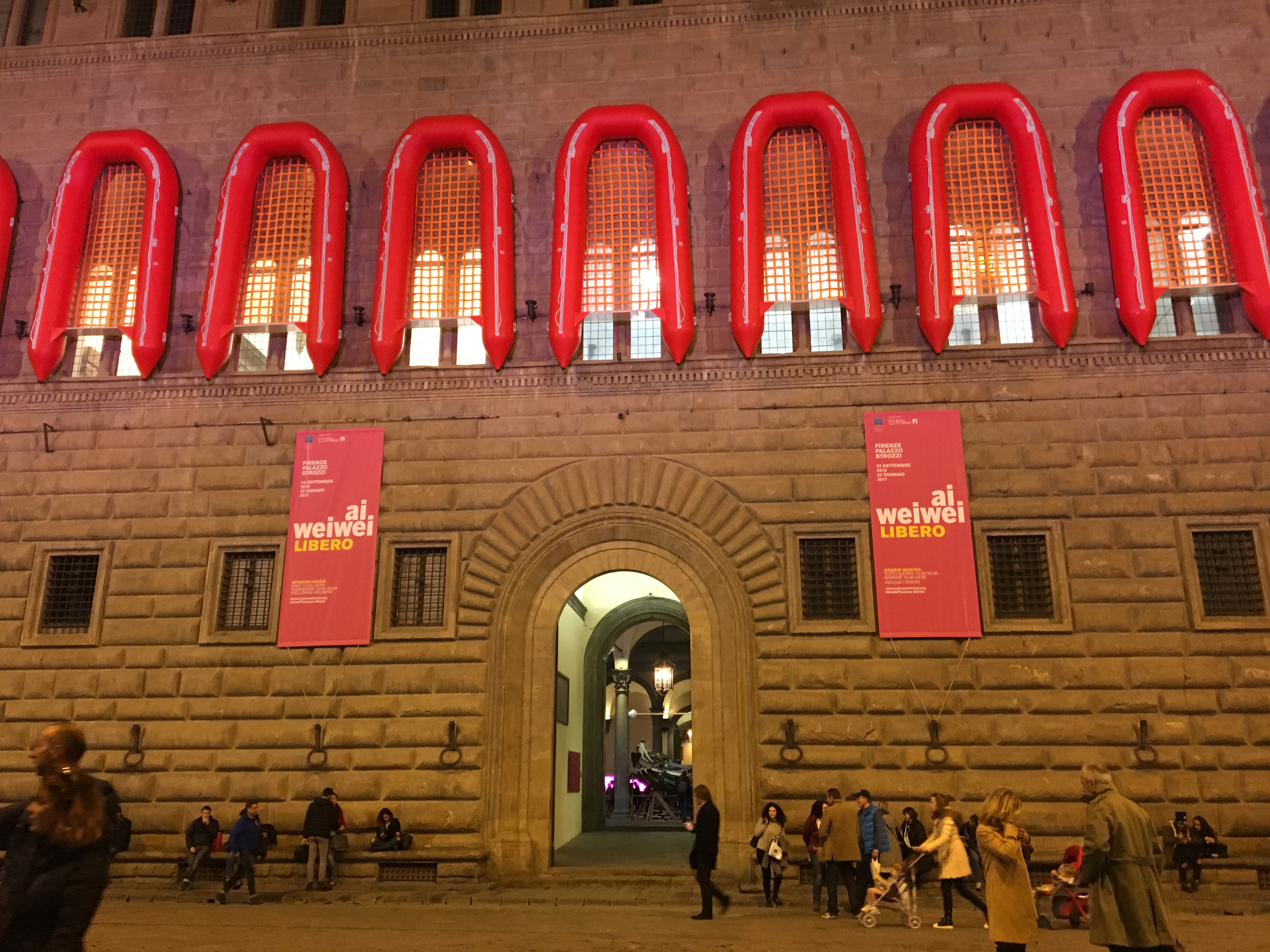
Walking in the center of Florence today you cannot miss the facade of the Palazzo Strozzi.
img_5091

Before entering the building Ai Weiwei’s installation begins to signal that you are about to see an exhibit unlike any that has been housed in this historic venue. The contemporary Chinese artist and activist has been allowed use of the entire building and museum, which is a first in its history. He is considered the most famous living artist in China, and many think the world.

This is an exhibit that requires you to look beyond the objects that he uses, into their metaphorical meaning. These are not just rubber life boats that are hung on the Strozzi but rather a loud statement of the plight of immigrants today.

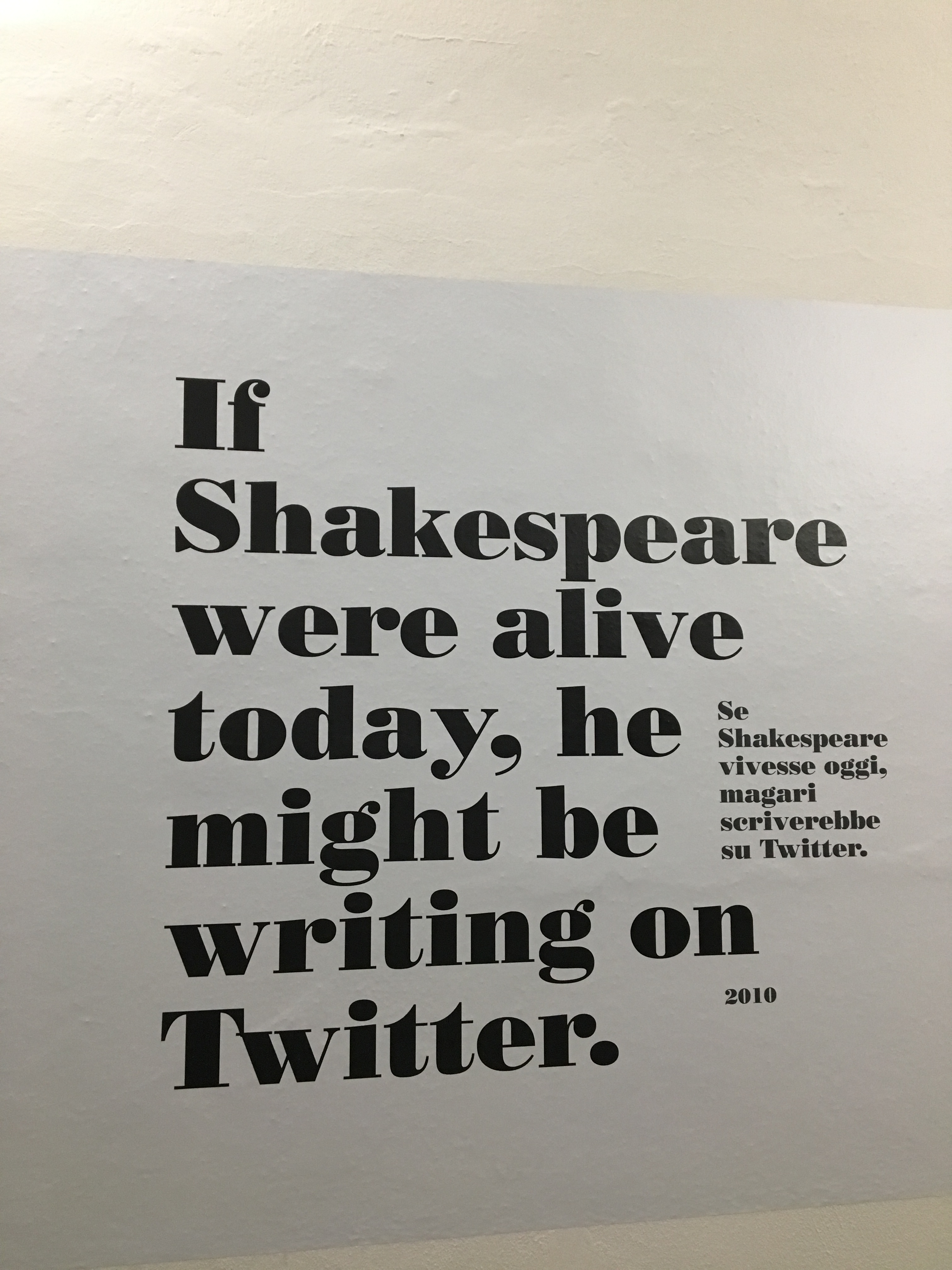
His statements, which are enlarged and displayed in the lower level  Strozzina gallery are provocative.

His statement,”Everything is art. Everything is political” gives us a deeper meaning into the title of his exhibit: Libero/Free.

img_5084

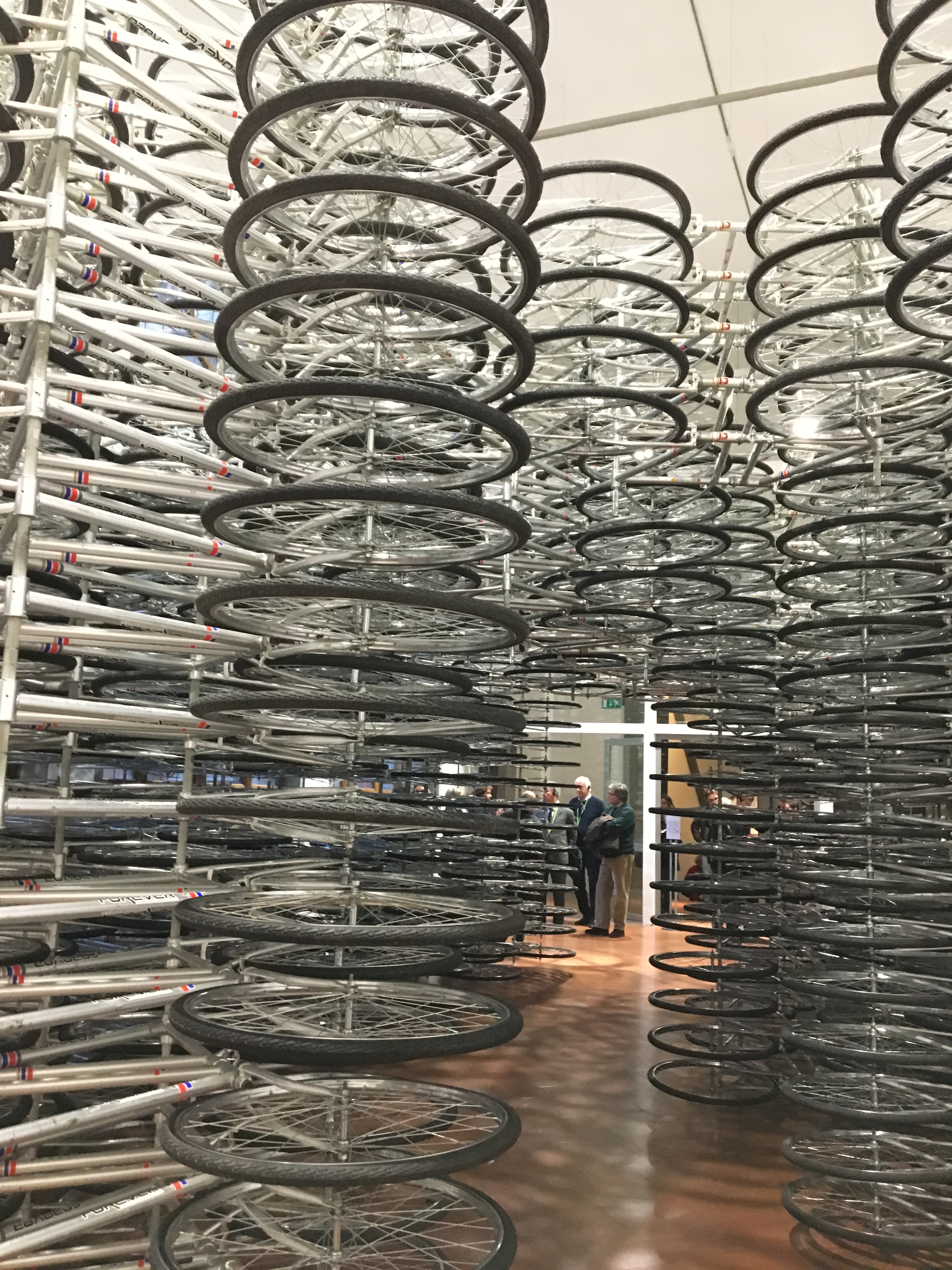
950 bikes are “stacked” symbolizing the freedom that allows the Chinese people to be mobile; the freedom to move about.
img_5068

Some of the display rooms are covered in wallpaper designed by Weiwei. In the photo of a section of the wallpaper you see that he has made a statement against censorship. Note the surveillance cameras with the Twitter symbol in the middle.

img_5072img_5087img_5089

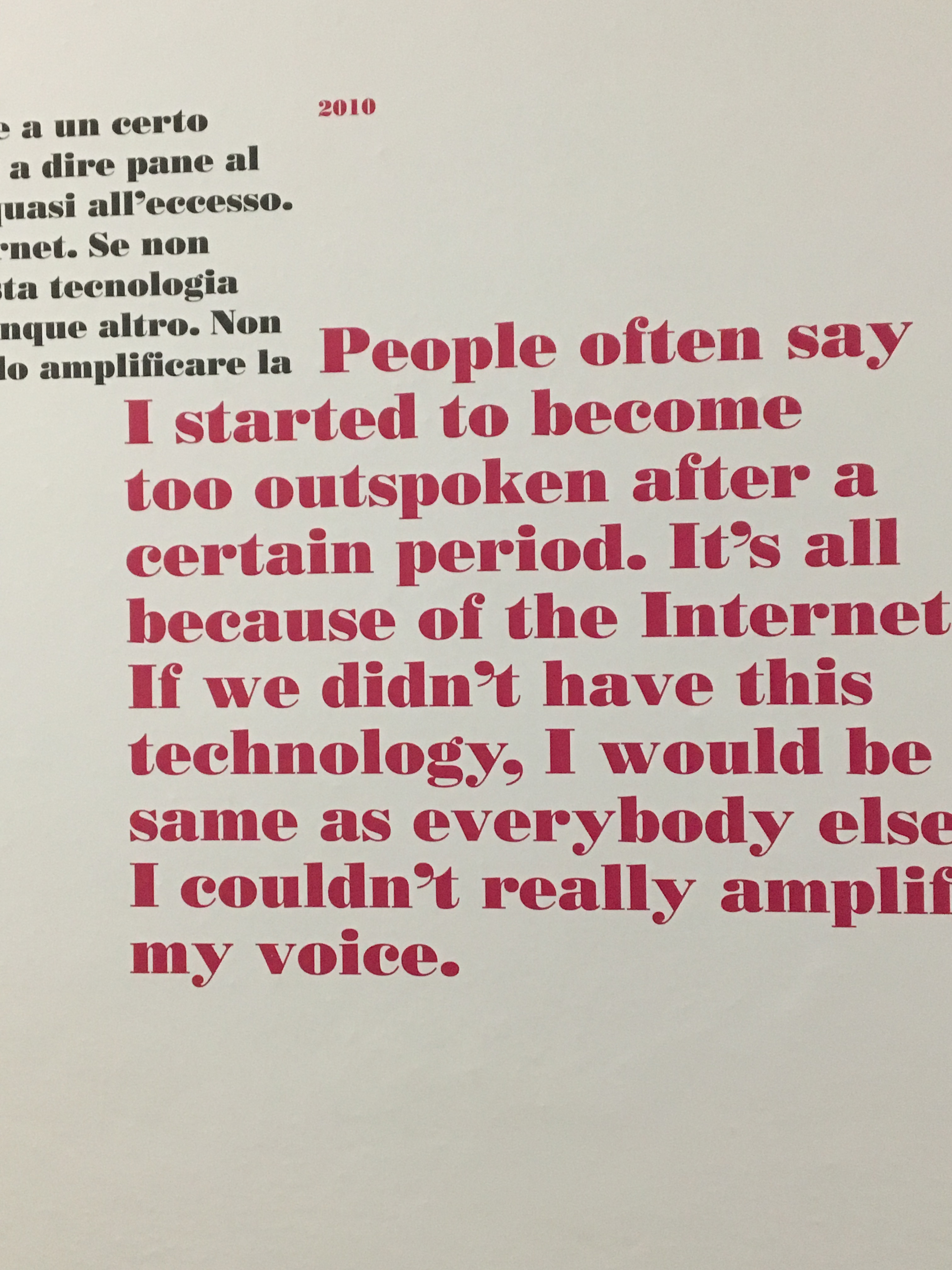
“If we didn’t have this technology, I would be the same as everyone else I couldn’t really amplify my voice”

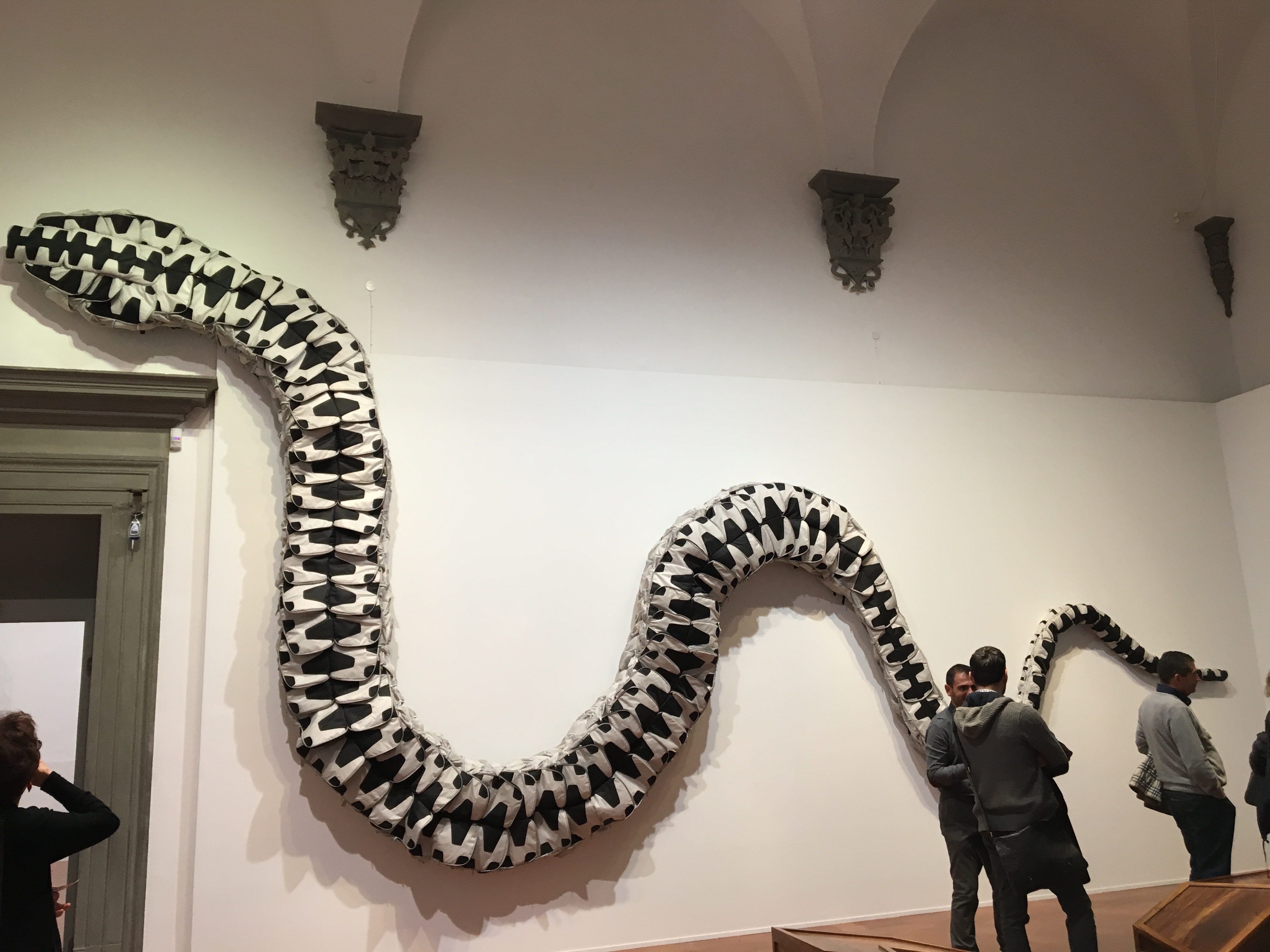
A most chilling installation is”The Snake Bag”, created after the 2008 Sichuan earthquake, where thousands lost their lives.  360 identical backpacks are stitched together in memory of the school children lost there. (a strong protest against the Chinese government, which tried to cover up the scandal of unsafely constructed buildings.)
img_5071

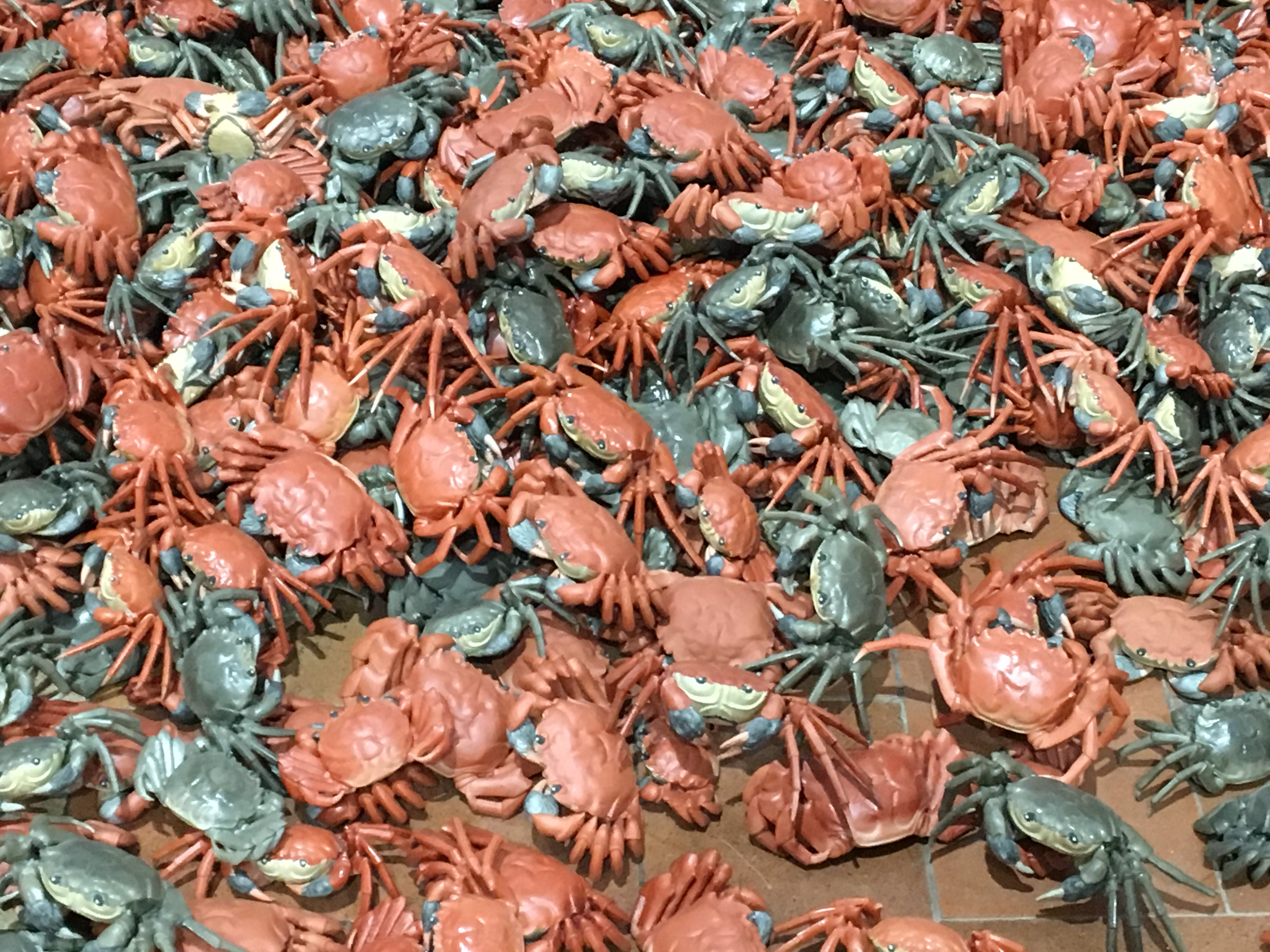
How is this food for thought: He Xie, river crabs, created in 2011. As a response to the government destroying his art studio Ai Weiwei invited guests to a banquet where he served river crabs, the symbol of tyranny. This installation is made up of hundreds of porcelain river crabs
img_5083

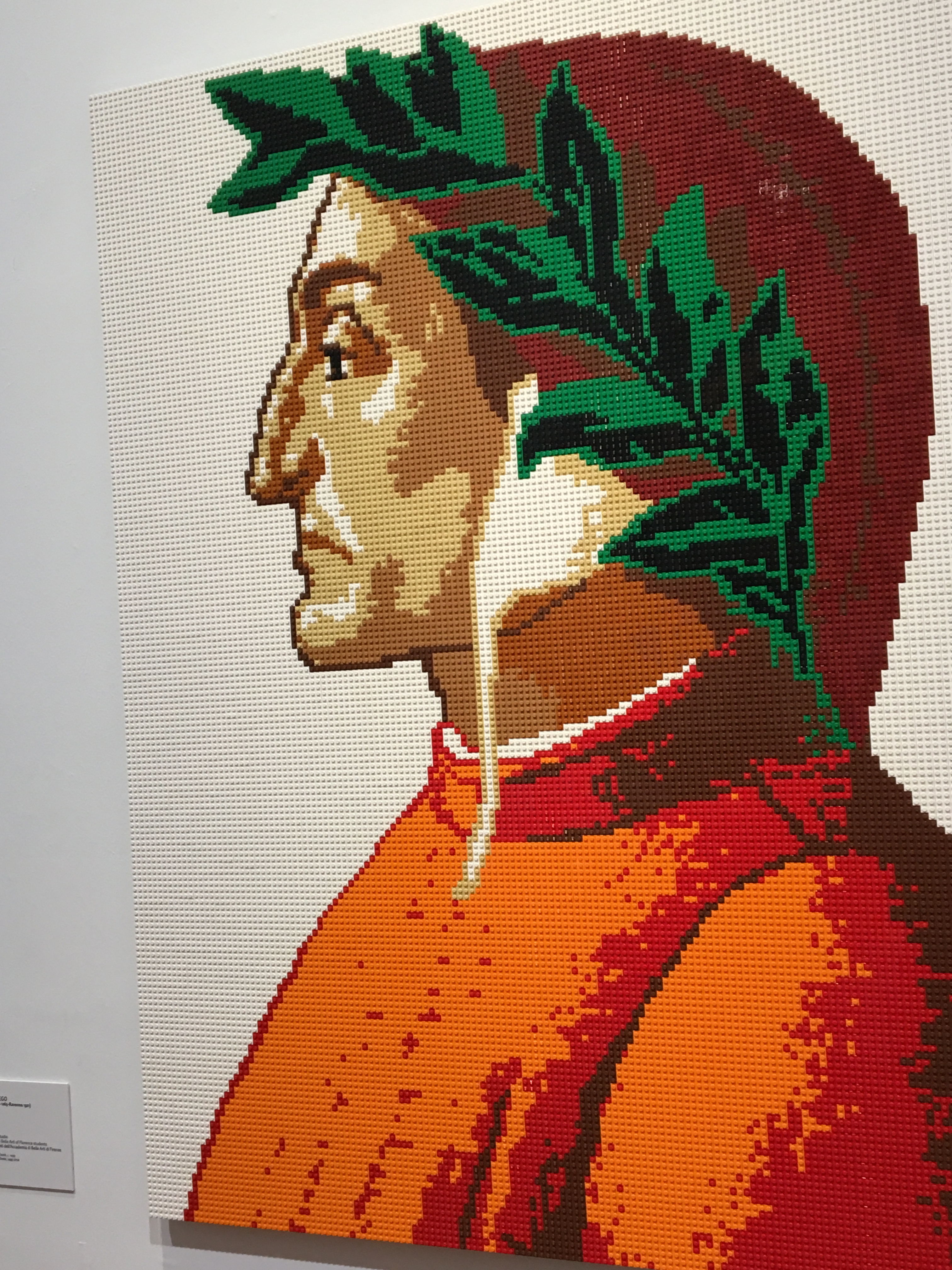
Ai Weiwei also revisits the Italian Renaissance paying homage to the political dissidents of that era, Dante, Savonarola, Galileo and Filippo Strozzi. The Palazzo was built by Strozzi after he returned. He wanted to build a bigger palace to show them!

img_2874

Below, Dante designed in Legos!

img_5075 img_5074

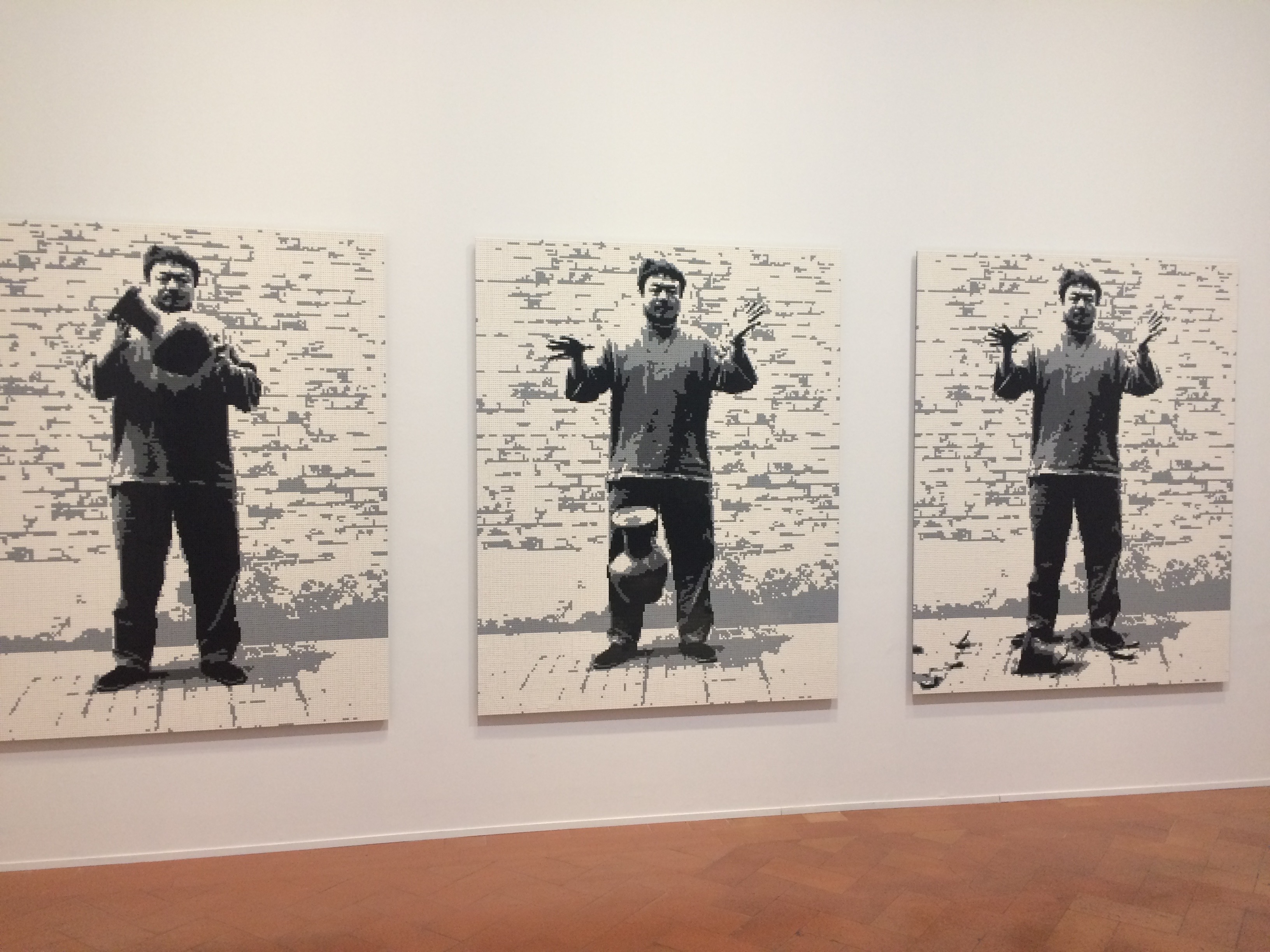
The artist, breaking a 2,000 year old Han dynasty urn rendered in legos:
img_2867img_5090

Personally, to have seen this exhibit in a time of political turmoil in my own country was sobering, yet hopeful.

The exhibit is on untill January 22, 2017.

If in Florence do not miss it.

Categories: Contemporary Art in Florence, Culture observations, Observations in Florence, Uncategorized | Tags: , , , , | 4 Comments

Side by Side: New Venues for Contemporary Culture in Renaissance Florence

Florence is the birthplace of the Renaissance and thanks to Anna Maria Luisa de’ Medici, the last heir to the Medici dynasty, her family’s vast collection of art must remain there. One would be hard pressed to find another city that houses more early Renaissance art.  Along with over 70 museums and historical landmarks (http://www.museumsinflorence.com/index.html) the city’s landscape is the backdrop to arguably the world’s most famous open air museum.

However, contemporary culture and art are also alive and well in Florence. The addition of the museum, Museo Novecento and “Opera di Florence” are welcome examples.

The Novecento museum is housed on the site of the thirteenth century Leopoldine hospital, which more recently contained the  Alinari National Museum of Photography. The former cloister/hospital borders the south side of the splendid Piazza of Santa Maria Novella. Here I am looking out of a second floor window in this very modern museum gallery.


IMG_1810photo 1

The foundation and bones of the museum may be early Renaissance, but the contents, multimedia booths, video rooms and sound devices are contemporary and cutting edge. There are many interactive exhibits appealing to children as well as adults.

IMG_2480IMG_2477

Twentieth Century Italian art is the focus with a selection of 300 works to experience


IMG_2373IMG_1806photo 2

On the top floor is a viewing room where you can sit and enjoy a wonderful collage of twentieth century films that celebrate Florence. Here are a few examples of some of the selection of films: Amici Miei, Obsession, Room with a View and Tea with Mussolini. This is a great way to relax and catch your breath before leaving the museum and exploring the church of Santa Maria Novella or the Pharmacy of Santa Maria Novella.


IMG_2481  IMG_2476

Yes, everything is different at the Museo Noveconto and there is something to be enjoyed and experienced by all.


An example of the use of modern architecture in a large green area with panoramas of historical Florence is the new “Opera di Firenze” located at the entrance to the Cascine park, near Porta al Prato.


IMG_1791IMG_1792new-florence-opera-house-b

The cultural center was just recently fully completed, and to say that it is impressive is an understatement! The architect Paolo Desideri and others  designed this ultra modern structure which consists of three concert halls including an open air auditorium. Pedestrian access to roof top terraces allows for panoramic views of the historical center as well as the beautiful  Cascine park. The old and the new are complementary.

Recently I attended an opera and the acoustics: state of the art.


6IMG_2458

The cafe and bookstore are open  daily (also on non performance days) allowing for family outings and enjoyment of the 13.301,60 square meters of public grounds.


IMG_1793

Truly a new GRAND modern piazza and entertainment complex for Florence and Europe.

Renaissance art and the contemporary arts continue to add a fine balance to the culture and richness of Florence. Everything that is old is new again!


Categories: Culture observations, Observations in Florence | Tags: , , , , , , | 1 Comment

Blog at WordPress.com.